
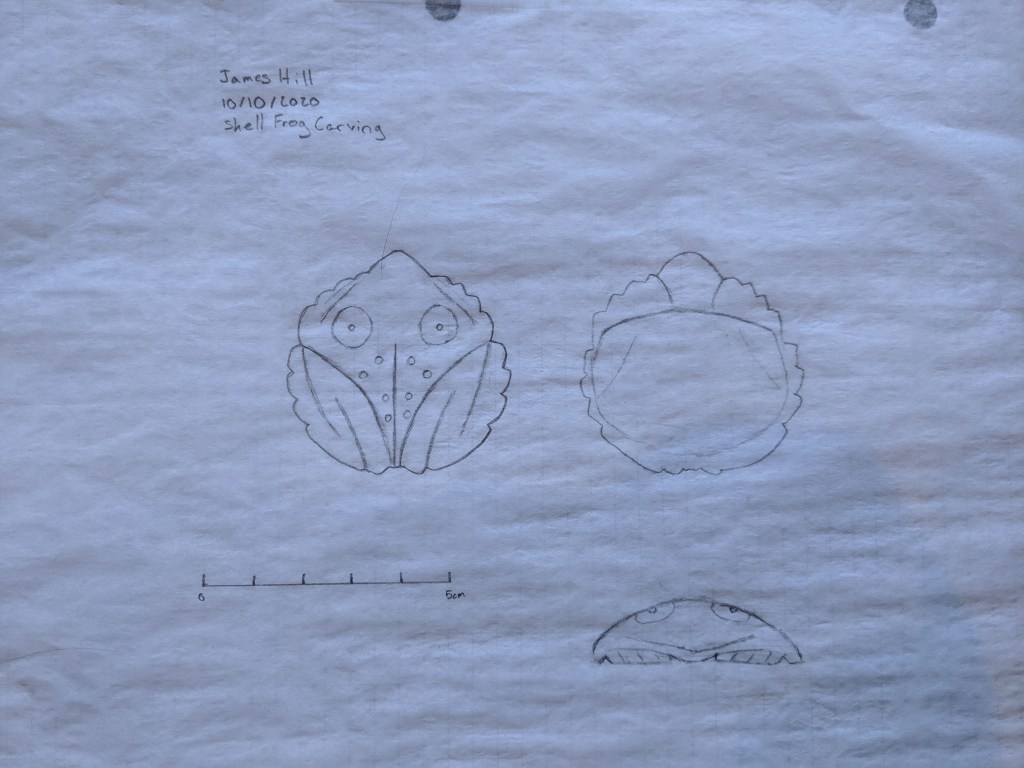
Like the first, I really enjoyed this archaeological drawing. For my heirloom, I ended up picking out a shell, likely a clam shell, that was carved into the shape of a frog. I ended up going with this because, while it isn’t as old as some things I could have found, most of the proper heirlooms in the family are jewelry, which I wouldn’t want to scratch up, or really delicate stuff, like a small goat woven out of straw. The frog came from a trip my parents took to Santa Fe at some point, and is likely Zuni style.

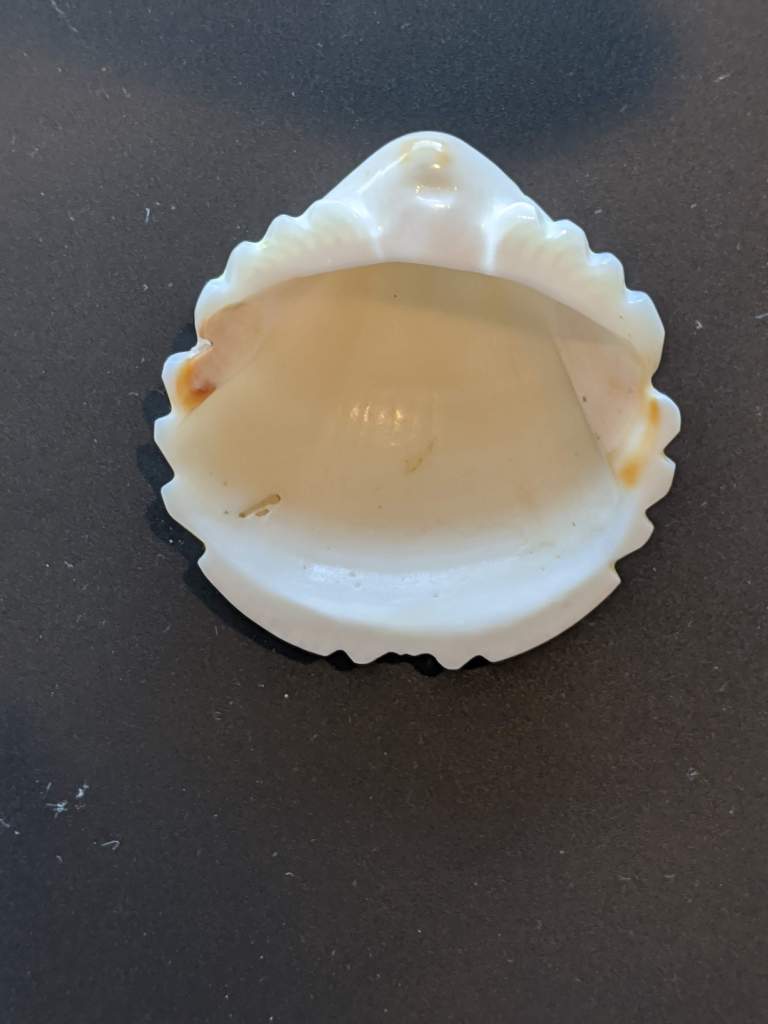
I found, as I continued working on the drawing, that I would look at the frog again and spot a new line, a new detail, that really worked to bring it to life. After the process, I feel I have a much greater appreciation for the skill and thought that went into the frog. Which is interesting to think about, because I didn’t have that feeling after working with the mug. I suppose that is the difference between knowing that something is newer and machine-made vs older and made by hand.
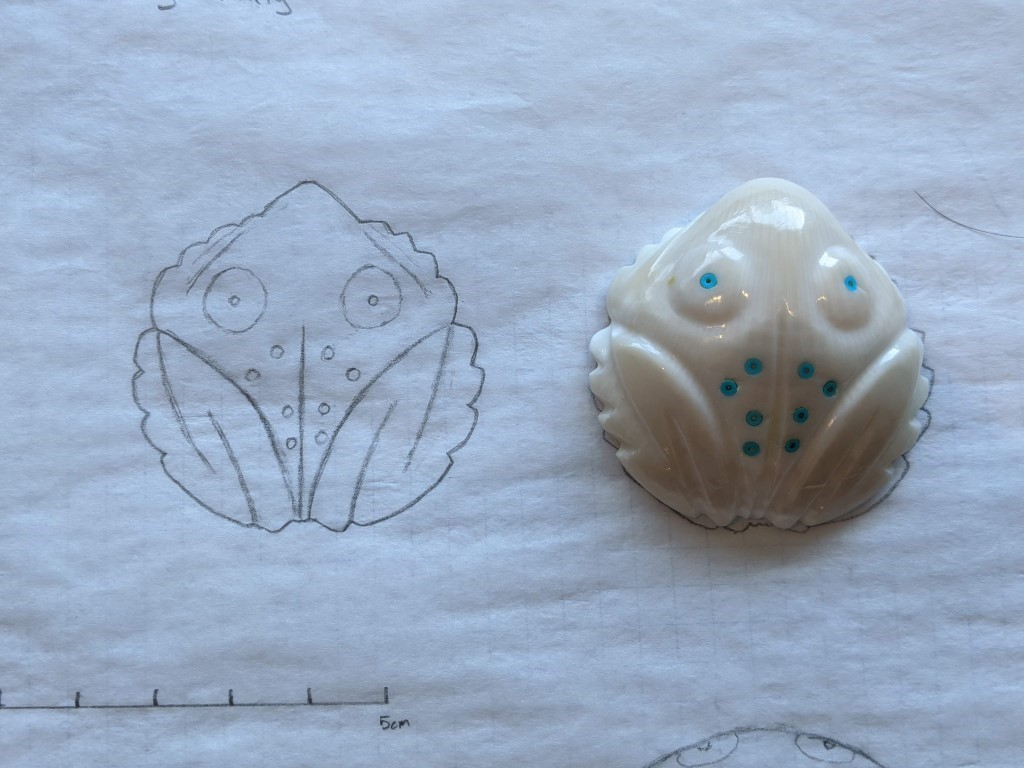
One thing that struck me with this drawing is how artifacts can be a great source of knowledge about a place. By looking at the materials or technics, one is able to learn a lot about the culture, as well as relationships with other nearby groups. It is possible to find something, like obsidian or coins, which are highly recognizable, far from their source. This opens up whole new revelations about contact and trade between one or many different groups for it to have ended up where it did. In the case of my little frog, it implies that, at some point, either I or someone I know, in this case my family, had had contact with someone in the Santa Fe region.
 Transgression In Action